Emerging archetypes in MVNO evolution in Africa
Aug 19, 2026


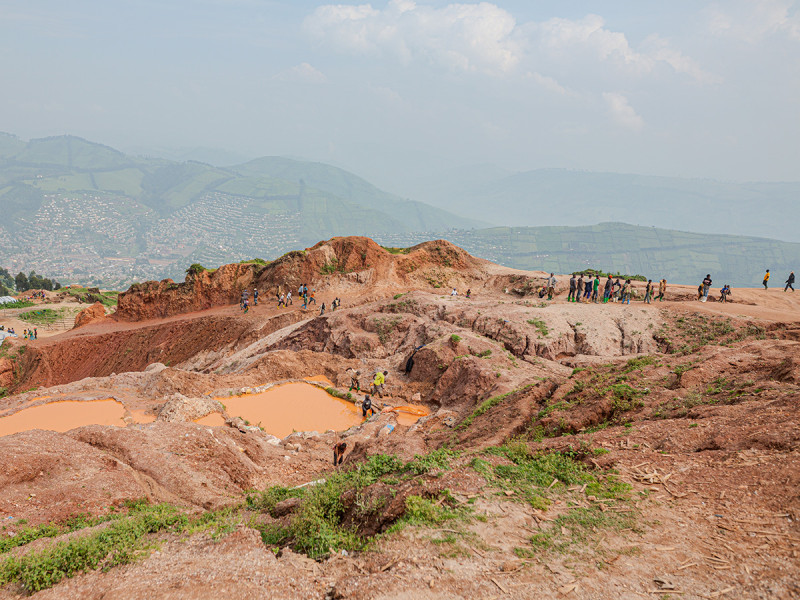
A recent investigation by Global Witness has highlighted how conflict minerals sourced in the Democratic Republic of Congo continue to find their way into the supply chains of companies such as Amazon, Apple, Google, Microsoft, and Vodafone.
Like the conflict, the practice is sadly nothing new. Global Witness’ latest report draws attention to the role of coltan, a mineral mined in the DRC that is smelted into tantalum, used to manufacture processors. The Rwanda-backed M23 faction has taken over the mines and industrialised the exporting process, with conflict coltan ending up in supply chains worldwide.
We spoke to the report’s author, Global Witness’ Alex Kopp, to discuss how the situation came to this, the role of Rwanda in facilitating the extraction of coltan from the DRC, and the steps that telecoms companies must take to purge their supply chains of conflict minerals.
James Barton: Can you provide some background on M23? There is documented evidence that the faction has committed atrocities and possible war crimes – but they are seemingly backed by Rwanda. Is this officially recognised?
Alex Kopp: Various UN reports have provided a lot of evidence that M23 is backed by Rwanda, with heavy weaponry. There's a lot of evidence in these very detailed reports that are published twice a year; they have a group of experts investigating what's going on in DRC, they have six people [who are] highest level of experts at the UN, and also Reuters has been reporting [on] Rwandan troops in in DRC, I think Reuters said up to 12,000 troops. There's a lot of evidence there, but Rwanda denies it.
The report mentions that M23 initially didn't appear to show much interest in the Rubaya coltan mines, but took it over a couple of years ago, and is now smuggling it into Rwanda – seemingly with impunity.
M23 has already been active about 15 years ago; there was a long time where they'd gone into hiding and hadn't been active, but in this recent period, at first they generally didn't seem to target mines or try to occupy mines or tax minerals in some way, but by the end of April 2024 they occupied these major mines, tantalum or coltan mines, and subsequently also other mines, plundering deposits of minerals.
The next step would be that Rwanda is then exporting this conflict coltan, and the UN seems to have highlighted that Rwanda is exporting more coltan than it produces. Is it fair to say that they're laundering it in this way?
I would call it laundering. It's difficult to know how much exactly they produce, because they don't publish any production data, but the exports have increased so much during these last years…2021 comparing with 2025, it's two and a half times more coltan being exported, while there is no public evidence that mineral production in Rwanda has increased substantially. Rwanda is involved, but there's also these industry schemes which should ensure traceability, but most of the coltan that is exported is going through these traceability schemes, and so legally exported and getting into international supply chains, and that's part of the laundering process.
So through these traceability schemes, coltan is being legally exported from Rwanda?
Rwanda makes traceability a condition to export minerals. That's in line with some international agreements on dealing with conflict minerals; ITSCI is the most the dominant scheme, and Better Mining played a smaller role, but in these last years has become a more and more important player, and we found evidence that through both schemes minerals are being laundered - basically, if you want to export minerals from Rwanda, you need to go through some traceability scheme, and then you get a certificate.
How were these systems intended to break the link between conflict and mining? Are there signs that corruption is facilitating this smuggling system?
They're a key element of the approach which has been developed to deal with conflict minerals. They're working also in DRC, where they should stop minerals that are connected to conflict, violence, and human rights abuses from entering these schemes. What is going through these schemes should be minerals not connected to conflict, not connected to human rights violations, so it should be conflict-free. In Rwanda, where there isn't a conflict in the country itself, and other neighbouring countries to DRC, they shouldn't allow smuggled minerals to enter the scheme, which often are connected to the conflict in DRC. Absolutely they don't work as they should. We've published a big report showing how the ITSCI scheme, this dominant scheme, has completely failed from the outset when it was set up, just a year or so after starting. There's a lot of evidence in the report, but we've spoken with the key person who set the system up in Rwanda, who did his assessment by going to mines and comparing it what was going through this scheme, and he said up to 90% of the minerals that we export through ITSCI have been smuggled to Rwanda from DRC. Over the years there’s a lot of evidence from UN reports, from NGOs in Congo, from us - around 2020, we went to some mines in DRC and had very detailed data on what is tagged, what is going into the ITSCI system, and compared it with what the mines in the area produce, and in some areas it was up to 80%, in other areas 90% These are quite extreme examples; in other places it's not that high, the rate of contamination, but it's a major problem. The key issue is that the ITSCI scheme is run by the very companies which buy the minerals; also the conflict in DRC that has been going on for almost more than 25 years and the mineral smuggling [are linked], and the system has been set up about 15 years ago. Before that, a lot of these companies were caught - by the UN for example - for buying conflict minerals, and when ITSCI was set up, it's basically a group of companies that have in the past bought conflict minerals that came together and said, “let's set up a system, we're tracing the minerals now”. So it's the very people that have caused a problem that say we have the solution. It's like the fox guarding the hen house.
Is the coltan that is being mined from the DRC directly funding M23?
These mines in Rubaya, where the report focuses, have been occupied by M23 since late April 2024, so it's under their control. The transport routes are under their control, and miners and traders have to pay taxes to M23 if [they] want to deal with these minerals.
To export them into Rwanda? Or just to transport them across the country?
To smuggle them into Rwanda, or bring them to Rwanda, but that's where most of these minerals go. We've also heard that some of them go to Uganda, but the largest [destination] is Rwanda.
The coltan is smelted to create tantalum. What is tantalum used for in electronics? Why is why is there this demand for it, and why is it being routinely smuggled out of the country?
The main use of tantalum is in tantalum capacitors, which is an electronic component - in almost all electronics products, you have tantalum capacitors. They're very heat-resistant and have a key function in electronics products. You find it from any laptop or mobile phone, or also in cars, and so on. It is also used for other purposes, for defence, aerospace, for medical devices - a number of other uses, but the main one is electronics.
Your report mentioned that the DRC accounts for around 15% of the world's supply of Tantalum. Are there sources of tantalum that are not from conflict zones that are in use? Why are supply chains turning to this source of it?
15% comes from just from these mines. There are other mines in Congo where more is coming from - almost 50% of the world's tantalum comes from the African Great Lakes region, most of it from Congo. Then the neighbouring countries have some, Rwanda also has some tantalum or some coltan, but there are other sources as well in different places - in Australia, for example, in Nigeria, in Brazil, but this is the most important region. The cost is an important factor - labour is extremely cheap in Congo. [Even with] paid labour, the standard of living is very low, the income generally is very low, so people are happy to get a bit more if they go mining, so that's a key factor why it's attractive for companies to source from Congo and that region. [Tantalum] can be recycled, I don't know to what degree, but it's not a resource that’s just used up.
In terms of the telecom sector, of companies that are manufacturing products, devices within this sector - where's the accountability? The sourcing of the metal from the DRC, from Rwanda, is being essentially whitewashed. Should companies stop using metal from this region, and if so, what are the ramifications to the telecom sector?
This kind of broadly agreed framework, the OECD guidance - most of these companies say that they follow this. That's about doing due diligence as a company; you have to set up a system, there's a five step approach. Step one is setting up a system for due diligence. Step two is then checking your supply chain; it can be quite a long supply chain, so companies should look back at different steps. Where are these minerals from? A key question is: which smelters are they sourcing from, and ideally go further back from the smelter, or ask them questions.
The guidance says: if there's a suspicion that suppliers are connected to conflict sourcing conflict material, then should you should immediately stop the relationship. In the current situation, you see that there's such a massive amount of smuggled material going to Rwanda. We've shown in the report that five of the seven largest exporters received smuggled material, so it's extremely difficult to responsibly source from Rwanda, and to avoid sourcing conflict material. We're not calling for a ban, but for companies it's extremely difficult to ensure that they're not sourcing conflict material, also because the traceability schemes which are set up are not working. The next step is RMI (Responsible Minerals Initiative) which are auditing smelters; we've also found evidence that these conflict metals are entering RMI smelters, and all RMI smelters sourcing from Rwanda have passed their audit. If you talk to auditors and if you look at the way they check, it's simply not possible to ensure that the minerals are not entering the scheme, so it's an extremely difficult situation. If companies believe that they can responsibly source, that would mean having people on the ground in Rwanda and going to the mines and checking very closely if they can do that.
It seems fairly unlikely that Apple or Ericsson are going to set up a scheme in which they're verifying the sources of these of these metals that they're dependent on.
They sit on the board of RMI, and these schemes that exist, these are the ones they use to legitimise the sourcing they do.
It's quite likely then that major telecom companies are not even unintentionally using metals that have been sourced from this conflict, mined, and smuggled out of markets. What are the alternatives for them? It’s not really within their interest to do anything about this if they can claim that they're using minerals that are RMI conformant. What is their incentive to increase the checks on this?
I don't see what's going on these board meetings, but what they should do is pressure the RMI to have a better standard, make sure that they have the possibility to properly check where the minerals are coming from, be stricter with smelters and exclude smelters which source problematic material. That would be the way of taking up the responsibility they have, but looking at the responses we get, they seem to turn a blind eye. Thinking how long this problem has been around, a conflict that's been going on for 25 years, and the problems with the system that has been set up, has been criticised over and over again. It's also like this situation we have now in Rwanda - it's not that this is the first time happening, there's massive smuggling. Rwanda is on the one hand involved in the conflict in DRC, and then bringing all the minerals to home to Rwanda. That's been at the basis of this conflict for four decades, and that's why the system has been set up, and obviously it's a test case. We see it's not working, and we see very little efforts being made, apart from, let's do training, let's send around some warnings and tell companies to be cautious, but there's no measures with teeth.
Apple’s response said it notified suppliers that their smelters and refiners must suspend 3T mineral (tin, tungsten & tantalum) and gold purchases from the DRC and Rwanda over concerns that the industry certification mechanisms were not able to perform the required due diligence. That's not much of a commitment, is it? It’s passing the buck on to companies that are under no obligation or indeed pressure to conform to these standards.
Yes, and several companies replied [that they] just use RMI, and told us “if these smelters conform with RMI, that means all is fine.”
The RMI obviously is not upholding the standards that it's supposed to. It's also quite telling that several companies didn't respond to the requests for comment, like including, as it says, Nvidia, Amazon, Microsoft, and Vodafone. That's a sign of complicity in the use of conflict minerals.
It's a problem that we have in the EU conflict mineral regulation. In the US, there's also a law covering conflict minerals, but the one in the US is not enforced anymore, and the one in the EU is full of loopholes. Both are not effective, otherwise there could be like risk for companies to be sanctioned or punished, but at the moment it's just some reputational damage that they could fear. The problem with the EU regulation is that it only covers raw materials, not processed material, so because the coltan is smelted in mainly Chinese but also other Asian smelters, that doesn't come to the EU as coltan, but as tantalum, and then it's not covered. Traxys is a [business] based in Luxembourg, which we found evidence after reporting that they've sourced conflict coltan, they've continued to do so, and they're not covered by the EU conflict minerals regulation, because they trade based in the EU, but they're not physically importing the material to the EU. Even if they were caught according to the regulation, these kinds of sanctions are so low, it is a few thousand euros, which means nothing for a company like that.
What would be the steps required to start bringing in stricter enforcement, stricter controls and due diligence?
We should have proper regulation which covers all these minerals and all types of minerals, and we should have sanctions like strict enforcement. Companies should do their job. If you talk about downstream companies, they should push the RMI to have stricter, stronger standards and checks. These are about the sourcing, these are key elements, but I think there's also the more political level that the key role that Rwanda plays in the whole issue.
Governments particularly should take action, should sanction the exporting companies that are dealing with these conflict resources, and should condition development assistance to Rwanda and only give aid if Rwanda stops supporting M23. They should also sanction the Rwandan army and key officials in Rwanda and M23.






Company registered in England, number 5724661
All content copyright © 2005-2026 Developing Telecoms Ltd. All rights reserved.