For many in the telecoms industry, the promise of cellular IoT has always been global scale.
Nokia on the evolving priorities of emerging market operators
Vendors
Nokia on the evolving priorities of emerging market operators
For many in the telecoms industry, the promise of cellular IoT has always been global scale.
As AI firms look to handle their ever-escalating compute loads, they are snapping up the global supply of consumer graphics processing units well before more can be produced – causing prices to surge worldwide for any product that contains a semiconductor.
Last week, we examined how Orange Group is building ecosystems across its MEA footprint through its Digital Centres initiative – but these training spaces are not the only pillar of Orange’s strategy in the region.
In low-income markets – such as much of Africa – customer loyalty can rest precariously on affordability, so establishing trust is essential for operators if they wish to retain their community.
Is the regulatory environment for satellite communications keeping up with advances in technology, especially with the growth of low Earth orbit (LEO) satellite services?
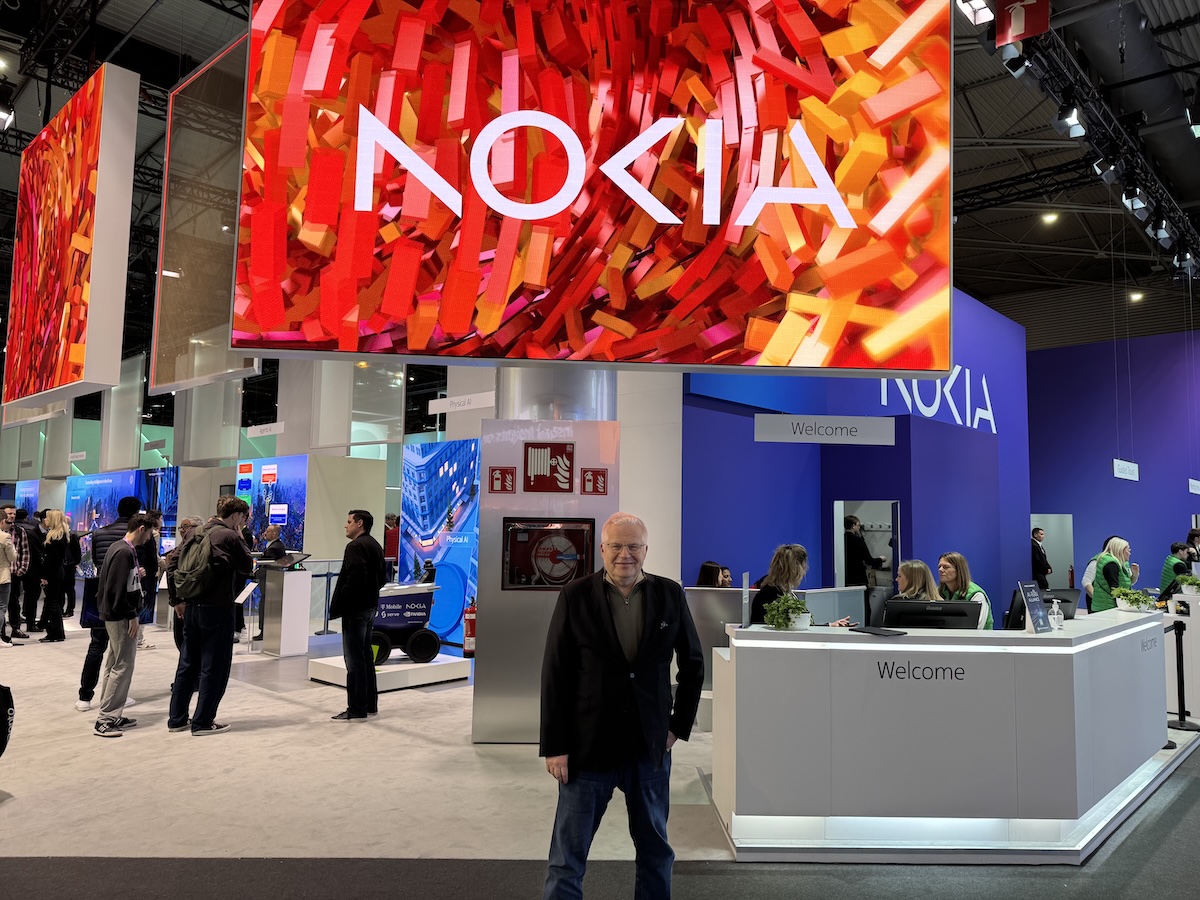
At this year’s MWC, much of the industry conversation centred on AI, automation and the next wave of network innovation. But for Nokia, the reality facing many operators - particularly in emerging markets - is more complex.
At Mobile World Congress 2026, a familiar narrative around satellite connectivity took on a sharper edge. While low Earth orbit (LEO) constellations promise to connect the hardest-to-reach communities, mobile operators in emerging markets are increasingly warning that the regulatory environment has not kept pace – and, in some cases, risks tilting the playing field.
Orange Group Middle East and Africa CEO Yasser Shaker said he is aiming to triple the number of users of the Max It super app to 75 million as part of a broader strategy to sustain growth across the operator’s African footprint.
The curtain has closed on another Mobile World Congress Barcelona, where more than 100,000 people wandered through eight cavernous halls, collectively racking up enough steps to climb a small mountain - or at least justify an extra tapas or two after a long day.
It’s the biggest event in the industry’s calendar, so of course Developing Telecoms is back on the ground in Barcelona next week for Mobile World Congress 2026 Barcelona. But what will be under discussion?
Operators across the world have spent the past several years seemingly unloading their passive infrastructure - towers, fibre optic networks, and other backbone assets - in what looked like a series of fire sales. But now, some are exercising contract clauses to bring these assets back in-house.
The global data centre map tells a blunt and uncomfortable story. Compute power is concentrated in the Global North, while Africa sits at the edge of a digital world it increasingly depends on. This imbalance is not technical - it is structural, economic and strategic, and it quietly shapes who holds authority in the AI era.
The US Trade and Development Agency (USTDA) has awarded a feasibility study grant to support SubConnex’s proposed SCNX3 subsea cable system, linking India and Singapore.
Artificial intelligence has become the most ubiquitous term in an industry obsessed with buzzwords, with the astronomical levels of hype matched only by the investment being poured into the technology.
When major cloud and internet platforms suffer outages, the disruption often appears global. Websites go dark, applications stall and social media fills with complaints. But beneath the surface, the impact is far from evenly distributed. In developing and emerging markets, the same technical failure can ripple more deeply - exposing structural weaknesses in how the global internet is built, routed and governed.
The year ahead undoubtedly holds challenges for the telecoms industry, but progress on a number of fronts appears assured.
History will judge whether 2025 proves to have been pivotal for the telecoms industry or perhaps heralding a false dawn. The technologies and tools necessary for service providers to transition from connectivity providers to digital services companies continued to be rolled out over the year, yet network investments have struggled to recover from recent lean years and monetising 5G connectivity remains a challenge.
In Part 2 of Developing Telecoms’ Global Forecast 2026, we share insight from vendors, including ZTE and Ericsson MFS, as well as the network & enterprise divisions of major operator groups, including Airtel Business and Liberty Networks.
The telecoms sector is always looking to the future – but as 2025 draws to a close, thought leaders across the industry are of course considering what 2026 will have in store. For our Global Forecast 2026, Developing Telecoms reached out to luminaries from service providers, manufacturers, AI specialists and operator groups to hear their thoughts. Over the next two weeks, we’ll share their responses.
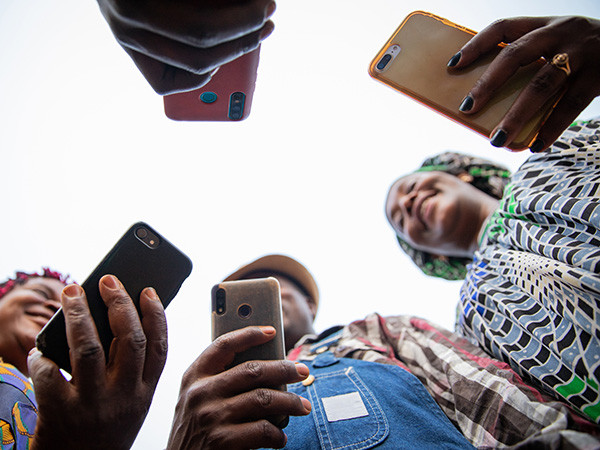
Smartphones are now so ingrained in our lifestyles that we see them as our gateway to connectivity. In developed markets, society is increasingly structured on the reasonably accurate premise that everyone has access to a 4G device, but in emerging markets, it becomes apparent that smartphones are more of a luxury.
Children across Africa are coming online faster than anywhere else in the world - but with this rapid connectivity surge comes heightened exposure to cyberbullying, harmful content, misinformation, and exploitation.
Africa’s coastlines are becoming gateways to a digital future. A wave of new subsea cables is reshaping connectivity across the continent - but experts warn that keeping them running, and ensuring their benefits reach inland, remains the real test.
Last week, Hurricane Melissa devastated Jamaica and swept through other islands in the Caribbean including Cuba, leaving a trail of destruction in its wake. Melissa was a Category 5 storm, the most intense to make Atlantic landfall for 90 years according to Agence France Press.
AI RAN (Radio Access Network) is attracting major investment from telecom providers as they seek to improve efficiencies to reduce their expenditure, with Juniper Research recently predicting that operators would plough $21 billion into AI technologies this year.
In a recent feature, I explored how operators are reducing their capex by turning to alternatives for RAN, including Infrastructure as a Service and Virtual RAN.
Deploying a mobile network has never been cheap, but the scale of the intensive capital expenditure required is increasingly pushing smaller players to seek out alternative models for delivering connectivity.
Hurricane season in the Caribbean usually runs from June to November, but the storm arrived a month early at Digicel’s Jamaica headquarters in 2024, when Marcelo Cataldo (pictured) took the top job to turn around a company struggling under billions of dollars of debt.
Next month marks Safaricom’s 25th anniversary. CEO Peter Ndegwa (pictured) was in London to reflect on the operator’s journey - from a subsidiary of Telkom Kenya to becoming the country’s largest and most valuable enterprise.
As the limitations of generative AI become clearer, agentic AI has emerged as the next trend within the sector – to the extent that the term has been widely adopted, poorly defined, and consequently often misunderstood amidst all the hype.
China Mobile (CM) was recently hailed for becoming a high-level autonomous network in only six years. The operator’s efforts were not wasteful and have showcased results that all operators, not just emerging market players, should strive for.
Globally, smartphone sales have been declining for the past few years, with emerging markets one of the few growth drivers. However, the cost of smartphones is a major barrier to adoption in these regions, and this has resulted in thriving grey markets for devices that are resold outside of official channels.
Mobile Virtual Network Operators (MVNOs) are playing an increasingly vital role in spreading connectivity across emerging markets. While they typically operate in smaller-scale environments than Mobile Network Operators (MNOs), MVNOs are often hotbeds of innovation - especially in areas like fintech and mobile-first services that are only now catching on in parts of Western Europe.
Cellular operators cannot hope to match the coverage that satellite delivers, but this advantage has long made the technology prohibitively expensive for providing widespread connectivity.
Telenor’s planned exit from Pakistan is currently being held up by the country’s competition authority – a delay the Nordic group argues is stagnating digital development in the South Asian nation.
DevelopingTelecoms.com technology news category feed
DevelopingTelecoms.com business news category feed
Developing Telecoms 2015 Emerging Markets Trends Survey is now complete! Submissions have been collated and analysed and are now available to download as a complete package, in PDF format, for reading off-line.
The download includes a unique introduction and summary not available anywhere on the website. This has been written by leading independent telecoms analyst and consultant Coleago Consulting. Click here to get your copy.
Developing Telecoms 2016 Emerging Markets Trends Survey will be undertaken during December 2015 and January 2016. If you would like to sponsor this survey please contact
Information about how to contribute will be made available later this year. To ensure you receive details please Register Here.