Egypt approves major data centre project
Jun 16, 2026

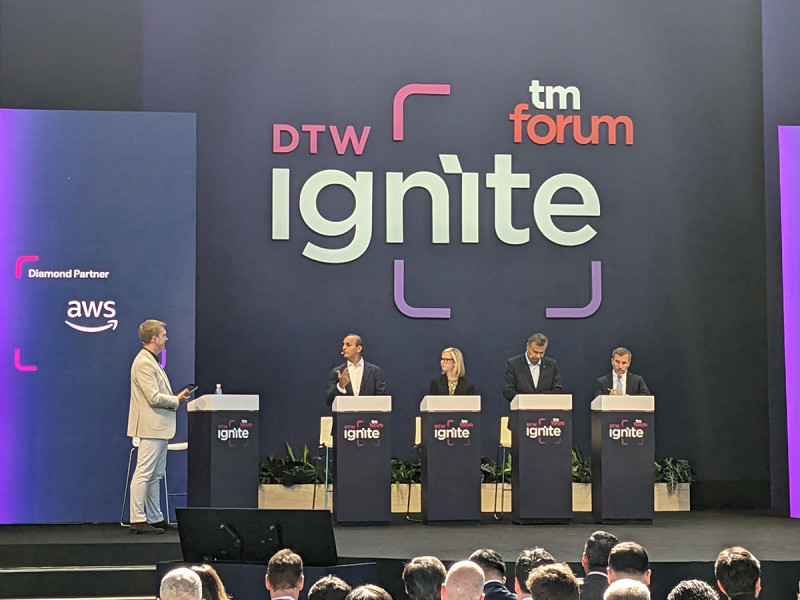
Day One of Digital Transformation World 2026 kicked off with a focus on speed – the runaway pace of AI evolution, the breakneck pace at which enterprises must work together to adapt, and the scramble to take advantage of opportunities as they evolve.
In his opening keynote, TM Forum Chairman Steffen Roehn remarked that as the pace of AI acceleration becomes increasingly overwhelming, speed of collaboration becomes a competitive advantage.
Level Four autonomous networks – in which AI assumes control over decision-making in specific scenarios – are now a reality. Against the backdrop of such rapid evolution, telcos are well-placed to become the trust layer that allows the AI economy to function.
TM Forum CEO & President Nik Willets underlined the importance of trust in what he dubbed the ‘Race to 2030’, in which operators will need to grasp their opportunity to compete in the AI economy. He noted that while 72% of enterprises claim to have high levels of trust in the functionality of their AI agents, just 18% are able to offer regulator-ready evidence to support these claims.
Willets outlined that while architecture certainly still matters, ODA (open digital architecture) must go further, evolving from composable to AI-native to facilitate network autonomy while offering regulation-defensible control layers and AI governance frameworks. Willets described AI-native ODA as effectively the blueprint for building and operating an AI-native telco.
But how can telcos translate this ‘AI hope’ into high volume growth? This was the question posed by former Axiata CEO and current advisor to the operator group’s board, Vivek Sood. In emerging markets, AI must help operators to grow sustainably and scale effectively to bring down the cost per GB – because ultimately, AI must help operators deliver value to customers. Sood outlined how traditional AI use cases can demonstrably make networks more efficient – in terms of pipeline quality, infrastructure rollout and operations, energy performance, and capital efficiency - and highlighted that the next step is to monetise this by unlocking AI impact at scale across the enterprise.
TIM Italy CEO Pietro Labiola emphasised how trust, not speed, is now the key parameter for telcos – and that they must demonstrate this by becoming the assurance layer, taking control of data as the issue of AI sovereignty becomes increasingly pressing. Sood agreed, noting that customers in emerging markets are more willing to pay for security and an improved quality of experience. Operators cannot assume that they can continue merely to sell connectivity for revenue – they have to invest in building marketplaces that provide more value to the customer. Sood highlighted that operators must view efficiencies as new growth opportunities.
However, creating differentiation through experience is of course a challenge. Keppel’s Manjot Singh Mann noted that even if AI enables telcos to offer improved customer experiences, they should not expect to charge more for this. The growth opportunities are around increasing efficiencies and reducing costs – telcos must be able to create new business models and revenue pools around AI, rather than expecting to offer more of the same.






Company registered in England, number 5724661
All content copyright © 2005-2026 Developing Telecoms Ltd. All rights reserved.