Will Iridium acquisition transform satcoms?
- Details
- Category: Satellite Networks
- 4941 views
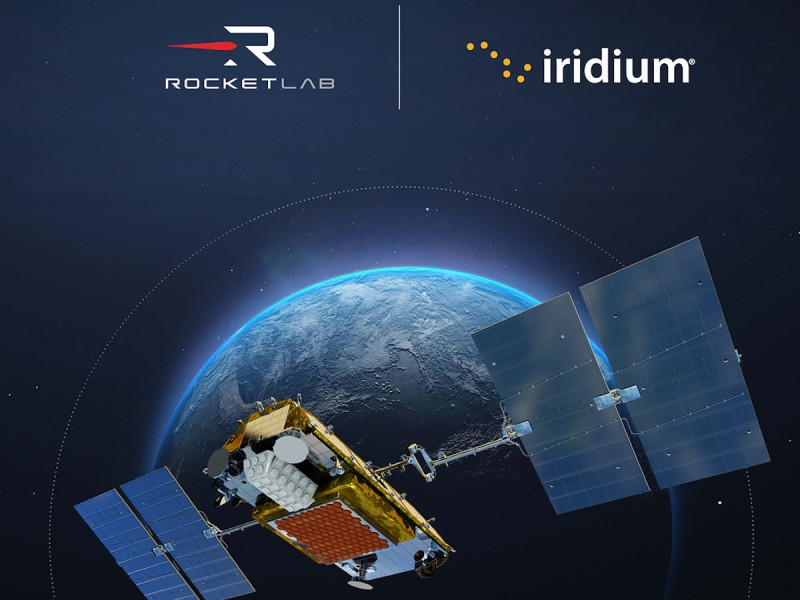
"One of the most transformative deals in the space industry." That’s the claim of Rocket Lab Corporation, a major name in launch and space systems, and satellite services provider Iridium Communications after the announcement of a definitive agreement under which Rocket Lab will acquire Iridium.
Rocket Lab will acquire all the outstanding shares of Iridium common stock for US$54 per share in a cash and stock transaction. This represents an enterprise value for Iridium of approximately US$8.0 billion.
While the acquisition joins together two innovative American companies to play a leading role in the US space economy, there is a global relevance too.
It merges Rocket Lab's launch capabilities and satellite manufacturing with Iridium's global satellite communications network, spectrum, and 500-plus strong partner ecosystem to create what is described as a competitive, vertically-integrated space company that designs, builds, launches and operates its own constellations, delivering critical communications capability to millions of users worldwide.
The transaction will give Rocket Lab an immediate foothold in space-based applications, including both proprietary and standards-based satellite Internet of Things (IoT) and direct-to-device (D2D), positioning, navigation and timing (PNT), and critical safety-of-life services, creating a formidable challenger in the global telecom market.
Rather than simply continuing the Iridium network, Rocket Lab says it will build upon it to scale into untapped markets and pioneer new space-based services to the benefit of global customers.
But will this deal affect developing markets? Possibly not directly, but it may well be relevant to international companies operating in such markets and requiring reliable communications in remote areas.
The SatNews website points out that Iridium brings an active network of approximately 80 cross-linked LEO satellites utilising globally harmonised L-band radio frequency spectrum. This specialised frequency allocation, it notes, offers weather-resilient, low-latency connectivity for voice, data, and Internet of Things (IoT) applications across remote maritime, aviation, and defence sectors.
The asset base also includes a dedicated PNT layer, which serves as an alternative encryption-safe PNT reference architecture in environments where traditional Global Positioning System (GPS) or Global Navigation Satellite System (GNSS) frequencies are jammed, degraded or otherwise unavailable.
There are cost implications too. The website highlights a structural shift projected to eliminate external third-party launch procurement costs, internalise launch service profit margins, and secure long-term manifest certainty for constellation replenishment as global launch availability tightens.
Sir Peter Beck, founder and CEO of Rocket Lab explains: “By marrying Iridium’s deep heritage, trusted infrastructure, and highly sought-after spectrum with Rocket Lab’s extensive and proven launch and manufacturing capabilities, we have the capability to unlock entirely new markets. We will go far beyond maintaining a legacy; we are going to build upon it to pioneer next-generation space applications and deliver sought-after capabilities to existing and new customers.”
This announcement comes only a matter of days after satellite operators Amazon, Iridium, Telesat and Globalstar launched a new trade association representing the non-geostationary (NGSO) satellite economy: the SpaceConnect Association. It's not clear how or whether the new grouping will be affected by this news.

More Articles you may be Interested in...


HispaSat boosts its presence in Latin America



Eutelsat supports Polish rail connectivity trial

Space42 and Viasat confirm Equatys plans
Starlink gets ten-year licence to operate in the UAE

China approves Geespace satellite IoT trial plans



Qatar Airways announces Starlink first



Lynk and Omnispace merge to form D2D company Elveo

What next for Hughes after bankruptcy filing?


Amazon Leo applies to launch D2D system


AST SpaceMobile service launch delayed