Payment platform for farmers launched in Malawi
Jun 24, 2026

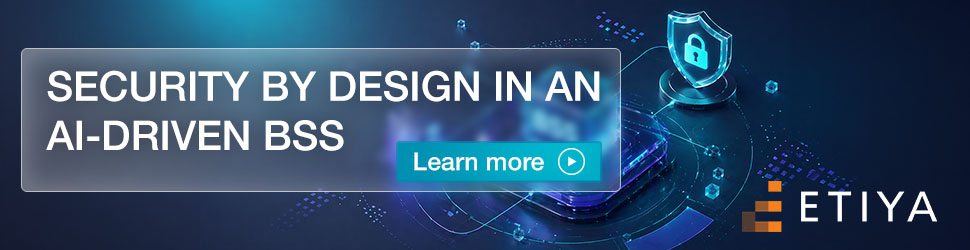


Mauritius Telecom CEO Veemal Gungadin highlighted the operator’s progress to build trust in AI-native learning across its home market, a strategy culminating in the creation of a national AI registry.
Explaining during his keynote at DTW Ignite 2026 today (June 24) that as software has become cheaper to build, access becomes easier and smaller teams are able to create localised, customisable software that can be adapted to fit with enterprise workflows.
Gungadin noted that this mirrors the adaptability of Mauritius itself, explaining how the country has intentionally reinvented its economy over time to increase its role in the global value chain. While the Mauritian economy initially focused on sugar, a land-based export, it pivoted to textile manufacture and tourism as a way of raising the country’s global profile, before cementing this trust with a shift into finance and ICT. The island nation’s size and adaptability have allowed it to become leader within the African ICT space; it achieved full fibre connectivity in 2017 and has an enviable 95% 5G coverage.
Mauritius has now turned its attention to AI, and Gungadin noted that Mauritius Telecom’s focus on localised, specialised software allows it to have a nationwide impact. The operator has piloted a learning tool on the island of Rodrigues that uses AI to allow students to learn in Mauritian creole. Gungadin highlighted the importance of working in partnership with the Mauritian government and education ministry, explaining that in this way the initiative could be treated as a national transformation project.
Initially the agent was intended as a personal tutor for students, as well as a revision aid, but this was questioned by both parents and teachers, prompting Mauritius Telecom to consider the risk that such a tool would encourage students to outsource their thinking before they had truly begun to think. Gungadin admitted that the operator did not have a concrete answer to this dilemma, and so in response refocused the project. Instead of aiming to provide each student with an AI-powered tutor, the tool was recalibrated towards empowering teachers by helping them create tests featuring personalisation, providing an overview of student achievement, and helping them to provide corrections and feedback on students’ work.
With such AI resources becoming increasingly widespread, it became more apparent that a trusted nationwide registry for AI was required – so Mauritius Telecom built the Mauritius AI Registry. The registry is open source and provides a comprehensive overview of different AI resources – including models, agents and skills – with the aim of providing the infrastructure for AI discovery within the country. Crucially it is a sovereign resource, focused on local relevance in respect of areas such as law, school curricula, and dialects. Gungadin noted that Mauritius’ small size and agility in tech allowed it to swiftly develop the proof of concept and then scale it to a national level – and underlined how countries of all sizes would benefit from developing a similar registry of their AI capabilities to help cement trust.







Company registered in England, number 5724661
All content copyright © 2005-2026 Developing Telecoms Ltd. All rights reserved.