


Airtel chief calls for tighter telco–hyperscaler collaboration to tackle $480bn fraud crisis
- Details
- Category: Cybersecurity
- 9433 views
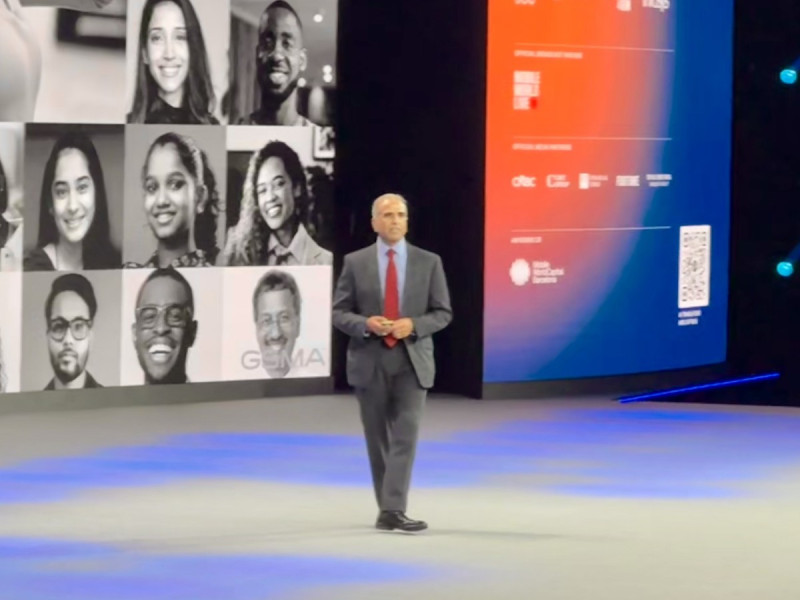
Bharti Enterprises chairman and founder Sunil Bharti Mittal (pictured) has called for closer collaboration between telecom operators, hyperscalers and regulators to combat the escalating threat of digital fraud.
Speaking at Mobile World Congress Barcelona on March 2, Mittal warned that an estimated US$480 billion is lost annually to digital fraud - equivalent to roughly US$15,000 every second.
He cautioned that as technologies such as AI continue to evolve, operators must prioritise cybersecurity or risk eroding public trust.
“If we do not take this seriously, people will begin to lose confidence in our networks and in the entire digital ecosystem,” he said.
Mittal pointed to efforts by Bharti’s telecom arm, Bharti Airtel, which has developed its own AI-powered fraud detection systems. According to the company, Airtel has blocked more than 2.9 billion fraudulent SMS messages and 71 billion suspicious calls.
He added that Airtel’s initiatives have received recognition from India’s Ministry of Home Affairs, with fraud incidents reportedly declining by 69% compared to rival networks.
Despite progress, Mittal said the goal of achieving “zero fraud” will not be possible without broader industry cooperation. He stressed the need for deeper partnerships across the technology ecosystem, including with emerging artificial general intelligence (AGI) players. At this year’s Congress, Airtel also announced a partnership with Google to strengthen protection for Rich Communication Services (RCS) messaging.
Mittal argued that operators must balance revenue growth ambitions with investments in cybersecurity, while regulators must also adapt more quickly to the pace of technological change.
“No single company can solve this alone,” he said. “The billions being invested in innovation are not sufficiently focused on trust. Regulation is not keeping pace with what is happening, and while regulators face their own constraints, they must recognise the urgency of the situation.”
He drew parallels with previous industry-wide cooperation, such as the development of 3GPP standards and coordinated efforts to reduce international roaming charges, where collaboration between operators and governments accelerated progress.
Mittal emphasised that while telecom operators operate within heavily regulated frameworks, many over-the-top (OTT) platforms remain outside equivalent oversight.
“Our industry is regulated at every level, but large parts of the digital ecosystem are not,” he said. “OTT platforms and messaging services cannot remain outside this framework. When we block fraudulent activity, bad actors simply migrate to WhatsApp or Telegram. We need comprehensive collaboration across all players, and regulators must step up to ensure everyone is part of the solution. We are losing nearly half a trillion dollars a year to scams and fraud — and it’s only going to go up.”
His comments reflect growing pressure on governments and technology firms to align regulatory frameworks as digital services and AI-driven threats become increasingly interconnected.

More Articles you may be Interested in...





Data centre group PDG increases capacity in India



Veon reshuffles leadership to push digital strategy


Papua New Guinea plans SIM card registration


The most "AI-powered" MWC of all time


Mplify showcases agentic connected experiences


 // Turnstile not appearing issue